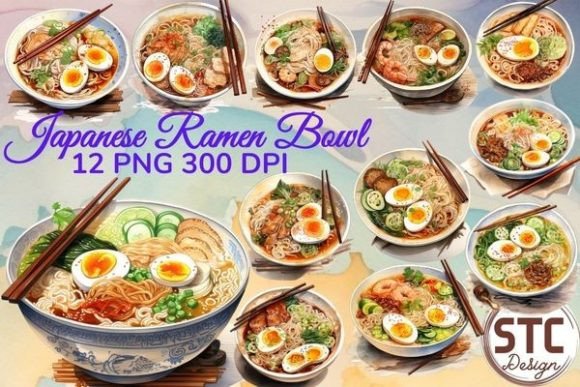
Japanese Ramen Watercolor Sublimation: A Feast for the Eyes
There’s a certain warmth and honesty in a hand-painted bowl of ramen. It’s more than just food; it’s a moment of comfort, crafted with care. We've tried to capture that exact feeling in a new set of design assets. This isn't just another graphic collection; it's a tool for telling stories about food, culture, and the beauty of imperfection. The Japanese Ramen Watercolor Sublimation set is designed for creators who want to bring an authentic, artistic touch to their work.
Imagine the gentle bleed of soy-based browns, the vibrant pop of a narutomaki fish cake, and the soft, textured feel of watercolor paper translated into a digital file. That’s the core of this collection. Each of the 12 PNG files is a high-resolution (300 dpi) painting, rich with the subtle drips and color variations that make watercolor so compelling. At 12x12 inches (3600x3600 pixels), they are perfectly sized for a huge range of projects, from a small sticker to a large-format poster. The transparent background is key, allowing you to layer these elements seamlessly into any design without the hassle of masking or clipping paths.
Where This Watercolor Style Truly Shines
The real value of a design asset lies in its versatility. You’ve likely spent hours searching for the right graphic that doesn’t look generic or overly digital. This collection solves that problem by offering a style that feels personal and crafted. It’s an ideal fit for a wide array of applications, especially where a touch of personality is needed.
For entrepreneurs and small business owners, particularly those in the food industry, this is a game-changer. Think about a local ramen shop needing a new menu, a food blogger designing a header image, or a specialty grocery store creating social media graphics. Using these watercolor elements instantly communicates authenticity and a passion for quality. They work beautifully for packaging design on everything from takeout boxes to artisanal snack bags, giving products a high-end, boutique feel.
For print-on-demand creators and crafters, the applications are nearly endless. The files are optimized for sublimation printing, which means the colors will transfer vibrantly onto fabric and other surfaces. Consider these uses:
- Apparel and Accessories: Create unique t-shirts, tote bags, and aprons that stand out from mass-produced graphics. A subtle ramen bowl on a notebook cover or a bold graphic on a poster can become a signature product.
- Stationery and Home Goods: Design eye-catching journal covers, planner dashboards, and binder fronts. The style is also perfect for creating custom tablecloths, decorative pillows, or even wallpaper for a themed restaurant or a foodie’s kitchen.
- Digital Products: Use the graphics as backgrounds for websites, blogs, and social media channels. They add a layer of depth and interest that a solid color or simple gradient can't match. A YouTuber focused on cooking could use them for video thumbnails or channel art.
Making It Work: A Practical Guide to Integration
Having a great asset is one thing; using it effectively is another. The goal is to enhance your project, not overwhelm it. The Japanese Ramen Watercolor Sublimation art has a strong personality, so it needs to be handled with a bit of design sense. Think of it as the main ingredient in a dish—it needs the right supporting flavors to shine.
Font Pairing is Crucial. This watercolor style is artistic and organic, so pairing it with a rigid, overly technical font can create visual dissonance. Instead, look for a typeface that complements its character. A clean sans serif font like Montserrat or Lato can provide a modern, readable contrast, allowing the artwork to be the star. For a more traditional or elegant feel, a simple serif font with good readability works well. Avoid overly complex script fonts or handwritten fonts that might compete with the art’s texture. The key is balance and visual hierarchy.
Evaluate the Context. Before you place an image, ask yourself what story you’re trying to tell. Is it for a playful sticker or a sophisticated poster? A busy, multi-element composition might work for a background, while a single, clean illustration is better for a logo or a focal point on a t-shirt. Always consider the final product. A design that looks great on a computer screen might need adjustments for printing on a textured fabric like a batik or ethnic cloth, where fine details can get lost.
Test and Refine. The best practice is to mock up your designs. Place your finished layout on a photo of a t-shirt, a mug, or a website template. This helps you see how the colors and composition work in a real-world scenario. Does the text remain legible? Does the overall brand identity feel cohesive? Don't be afraid to adjust the scale of the watercolor elements or change their placement. A little experimentation can turn a good design into a great one. This set gives you the high-quality design assets to start with; your creativity does the rest.
Ultimately, this collection is for the designer, marketer, or hobbyist who believes that details matter. It’s a practical, high-quality tool for anyone looking to infuse their projects with a genuine sense of artistry and cultural appreciation. It’s about giving your audience something that feels real, crafted, and worth their attention.